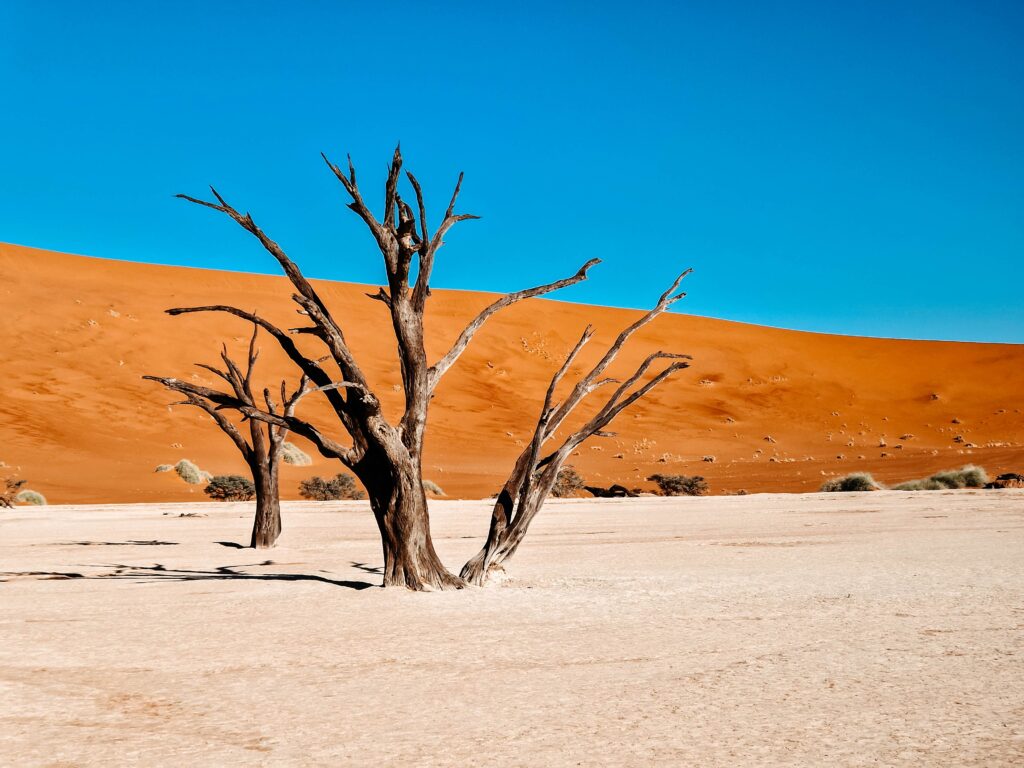
Namibia had been on my list ever since I saw a surreal photo of dead trees in a white pan, surrounded by orange dunes. It looked like a place that doesn’t exist. Then my dentist mentioned one day that he’d seen lions in Etosha National Park, and the wait was over. My boyfriend (who’d sworn off Africa) gave in surprisingly easily: “Fine, book it, I’ll deal with the car.” If you’re planning a Namibia self-drive road trip and don’t want a copy-paste guide from a tour operator, here’s everything you need to know: visas, costs, food, safety, and the mistakes we made so you don’t have to.
We spent 14 days in Namibia in April 2023, landing in Windhoek at the end of April and flying out at the beginning of May. I’m writing this post in 2026 because I didn’t have time sooner. Luckily, I still keep my Instagram highlights to jog my memory, and you can also find more day-to-day glimpses there. Feel free to give me a follow while you’re at it. One good thing also came of the delay: I could check today’s prices instead of old, outdated ones, and you get to skip all the planning headaches I went through. 😉
When to Go
Namibia has two seasons: dry (May to October) and wet (November to April). The dry season is ideal, with little to no rain, clear skies, and animals clustering around waterholes, which makes wildlife easier to spot. The wet season brings most of its rain in January and February. April is still technically part of the wet season, but we saw no rain, had clear skies, and almost no other tourists.
Getting There & Visa Requirements
You’ll fly into Hosea Kutako International Airport (WDH), Namibia’s main international gateway, located roughly a 30-min drive from the capital Windhoek. It’s a small airport, so arrivals and immigration move fast, even with a full plane.
Our 2023 visa required a full stack of documents, and processing took a couple of weeks. Namibia has since overhauled its visa system – the current fee is about $90 USD for most nationalities, whether you apply online or on arrival. Rules change, so it’s worth checking current requirements before you book.
Getting Around
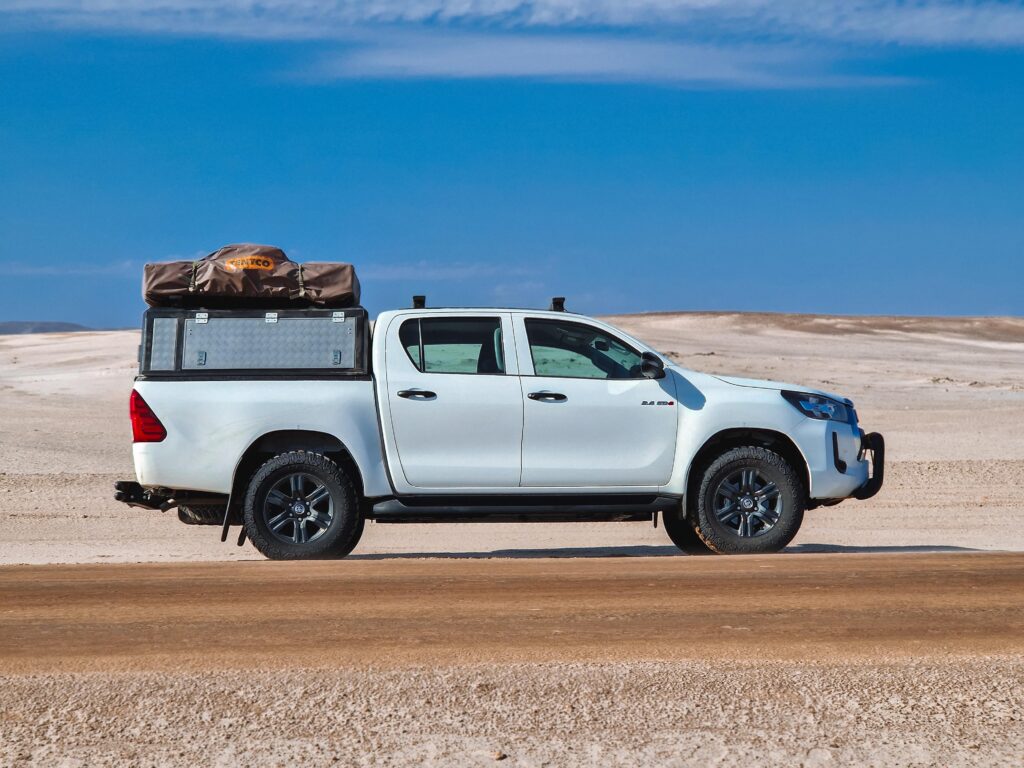
We rented a 4×4 Toyota Hilux with a rooftop tent from Safari Car Rental. An agent met us at the airport and drove us to their office, about 20 minutes away. We had a briefing, and about an hour later we were set to go.
Honestly, the tent is worth it, because you can stop almost anywhere and sleep under the stars, plus cook your own meals in really cool places. We paid $120 per day for a camping-equipped 4×4, but prices depend on the season and operator.
A cheaper, more available option that doesn’t need booking well in advance is a standard 2WD car. But if you want to follow our itinerary, I’d recommend getting a 4×4. Skipping the tent is an option – we only slept in ours once, but we liked it a lot and would do it again.
Our 14-Day Itinerary
We planned this route as best we could from home, without knowing exactly how each stop would feel once we got there: Windhoek → Otjiwarongo → Etosha → Omaruru → Spitzkoppe → Cape Cross (quick coastal detour for seal colonies) → Swakopmund → Walvis Bay → Sesriem → Windhoek. We saved a couple of days for improvisation.
Most self-drive itineraries actually go the other way: Sossusvlei first, then Swakopmund, saving Etosha as a highlight for the end. But we were happy with our route.
I’ll shared our full itinerary in a separate post, day by day, along with useful tips and what we’d change – soon.
Where We Slept
- Otjiwarongo: Out of Africa Town Lodge – convenient, relatively cheap, good breakfast, spacious room.
- Near Etosha: Epacha Game Lodge & Spa – see my honest review.
- Omaruru area: Omaruru Guest House – cheap and basic, but did the job as a stopover after leaving the Waterberg region.
- Spitzkoppe: Spitzkoppe Tented Camp & Campsite, we slept in one of their tent-cabins – amazing experience, but camping itself would have done the job too.
- Swakopmund: Hotel A la Mer – great stay, good location, fair price, excellent breakfast.
- Sesriem: Sesriem Camp, the closest campsite to the dunes – our only night in the rooftop tent, but an amazing experience under the desert stars.
- Stampriet area: Stofpad Lodge – a small, fantastic, brand-new property with a pool and campsite.
- Windhoek: honestly can’t remember the name – it was in a suburb, about a 10-minute drive from the shopping center. Safe and quiet.
Food and Groceries
Meat eaters will love it here. The German colonial past left behind schnitzel and sausages, which mix well with the African-style tradition of dried, spiced meat. The real star is game meat, like oryx, kudu, and springbok. I’m not usually a big meat eater, but I’ll tell you, the steaks were delicious and at very affordable prices.
On the coast (Swakopmund, Walvis Bay), the seafood takes over: oysters, rock lobster, and fresh linefish, thanks to the cold Benguela current – finger-licking good again. Vegetarians won’t go hungry either; there’s plenty of vegetables, cooked in genuinely tasty ways. I’d go back to Namibia for the food alone!
Supermarkets (Spar, Checkers) are well-stocked in Windhoek, Otjiwarongo, and Swakopmund, so stocking up on snacks and water is easy. In smaller towns and along remote stretches, options shrink fast, so buy more than you think you need before heading into the more isolated parts of the route.
Safety
We felt 100% safe the entire trip. Namibia isn’t South Africa in terms of crime, and we never once felt unsafe or unwelcome anywhere we went.
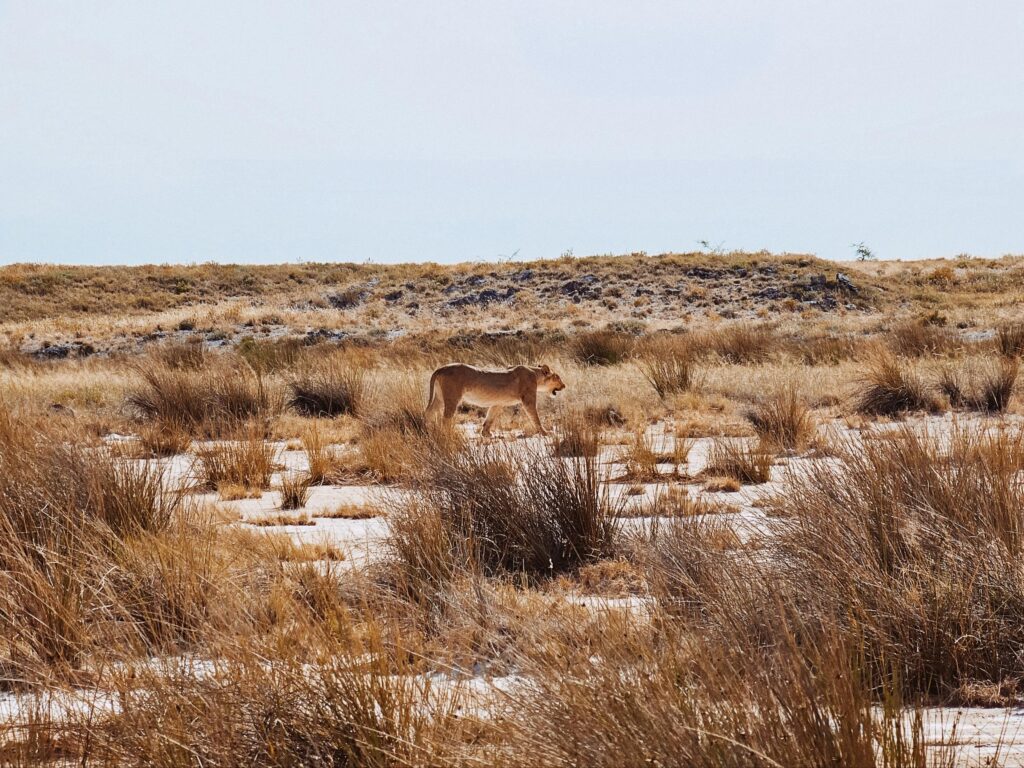
The real risks are the wild kind: snakes, mostly (like puff adders or black mambas in the bush). They’re not around every corner, but this is genuinely wild terrain, so watch where you step and don’t go wandering barefoot through the bush. In Etosha specifically, you’re not allowed to get out of your car anywhere except at designated rest camps and picnic spots. It’s not a suggestion; it’s the rule, and it exists because you’re sharing the road with lions and elephants.
Prices
The most expensive part of the trip is the car rental, especially if you stretch to a 4×4 with a rooftop tent. The second is the flight ticket, depending on where you’re flying in from. But apart from that, Namibia is still a very affordable country.
- Visa: about $90 for most nationalities (2026)
- 4×4 Car Rental: $65–$140/day for an unequipped 4×4, or $100–$210/day for a camping-equipped 4×4 with a rooftop tent, depending on the season.
- National Park Entrance Fees: $17.50 per adult/day plus $3 per vehicle/day (for major parks like Etosha and Sossusvlei)
- Hotels: from $40-$100 for a very decent place with a great breakfast
- Campgrounds: roughly $15-30 per person per night
- Fuel: diesel runs about $1.60 per liter; expect $550-750 total for the whole 14-day route (around 3,000+ km in a 4×4), depending on your itinerary
- Groceries: lower than Europe
Other Useful Tips
- Google Maps underestimates driving time on gravel roads. Add at least a 20-30% buffer time to any route estimate.
- Flat tires are common on Namibia’s gravel roads. Make sure your rental comes with at least one full-size spare, and check that you actually know how to use the jack before you’re stranded and need to.
- Read the fine print on your rental insurance. Our car itself was great, nearly new, and we never got a flat tire. But we did get a small scratch, which would’ve cost about $30 to fix – and the rental company still took our entire $175 security deposit, deductible included. It’s the one thing that stopps me from fully recommending them.
- Lower your tire pressure on soft sand sections (Deadvlei or Sandwich Harbour) for better grip. We learned this firsthand when our car got briefly stuck in deep sand near Deadvlei!
- Fill up fuel whenever you can, not just when you’re low. Fuel stations can be 300+ km apart, and everything costs more once you’re inside a park.
- For a SIM, skip the airport queue and set up an Airalo Namibia eSIM before you land (use code ANDA5890 for a $3 discount) – roughly half the price of what we paid at the airport. We didn’t know about Airalo back in 2023, or we would have used it ourselves.
Final Thoughts: Why Namibia Stole My Heart
Namibia was so much more than just 53rd country checked off my list. It was the place where I had my very first roof-top tent experience. Even though we only slept under the stars for one night, that raw, peaceful feeling of waking up in the wild completely hooked me.
Add to that the lion sighting, the unreal, almost endless landscapes, the incredible food (seriously, the food here is insane!), and the complete absence of crowds. Everywhere we went, it felt like we had this vast, diverse continent all to ourselves.
Africa has always held a special place in my heart, but Namibia’s quiet beauty, freedom on the open road, and endless variety made one thing absolutely clear: I’ll definitely be back.