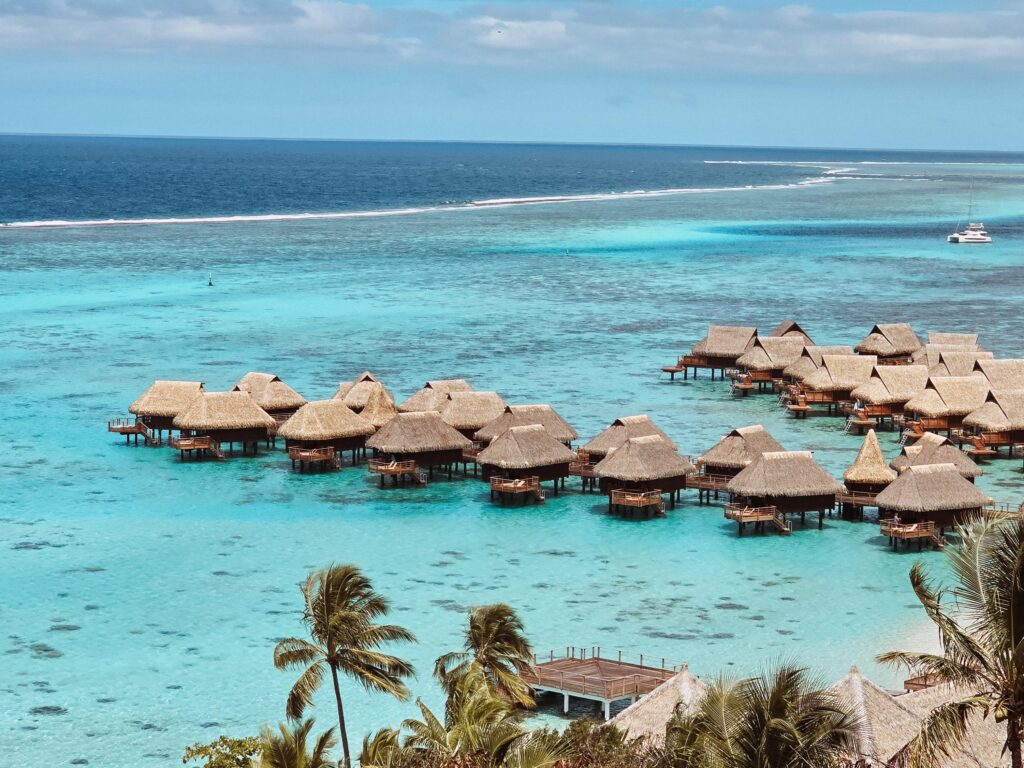
The islands of Tahiti had been on my travel wish list since forever. Having visited the Maldives and stayed at beautiful luxury resorts worldwide, I wasn’t looking for just another tropical holiday. Spending a few nights above the lagoon in my dream destination seemed like the perfect addition. But when I started researching overwater bungalows in French Polynesia, I nearly had a heart attack. And trust me, it wasn’t from excitement.
Luxury resorts in the Maldives have become incredibly expensive in recent years, so I thought I knew what to expect. Apparently not. A single night at some of these resorts cost more than my entire monthly salary. Before tax! I mean, WHAT? It’s not that I couldn’t afford a couple of nights, but everything has its limits. So I set mine: 3 nights in an overwater bungalow, with the best possible balance between snorkeling, privacy, guest reviews and price.
Believe me, I practically earned a PhD comparing resorts, locations and bungalow categories. But the research paid off. We chose Manava Beach Resort & Spa on Moorea, and although we did pay an obscene amount, those 3 nights made the entire trip for me. Still, I’m pretty sure I wouldn’t have enjoyed it nearly as much without careful planning and realistic expectations.
This isn’t an advertisement for Moorea, Manava or overwater bungalows in general. And I’m certainly not saying Bora Bora isn’t worth the money. Some people swear it is; others call it daylight robbery. I haven’t stayed there, so I’ll leave that debate to those who have. This guide is for travellers like me: people who want their little piece of paradise without having to sell a kidney to pay for it.
1. Bora Bora Isn’t Your Only Option
Bora Bora may be the most famous destination for overwater bungalows in French Polynesia, but it’s certainly not the only one. You’ll find them on other islands and atolls, including Moorea, Taha’a, Tahiti and Tikehau.
Your choice should depend on what you want from your holiday. If you’re planning to just enjoy the luxury, you probably don’t need a large island with endless things to do. But if you enjoy hiking, sightseeing and exploring beyond your resort, Moorea and Bora Bora offer plenty of opportunities. Tahiti has even more to explore on land, although its coastline doesn’t offer quite the same classic turquoise lagoon scenery as Bora Bora or Moorea.
Prices vary between resorts, bungalow categories and travel dates. Getting there matters too, since domestic flights and boat transfers can make a significant difference to the final cost and travel time.
My tip: Start with the kind of holiday you want, then compare specific resorts and the total cost of reaching them. The most famous island isn’t necessarily the best choice for you, and neither is the cheapest.
2. Luxury Prices Don’t Mean All-Inclusive
With prices like these, you’d expect gourmet meals, unlimited cocktails, a private chauffeur and someone fanning you with a palm leaf. Well, think again. Sometimes even breakfast isn’t included!
While researching resorts, I read a review from a couple who’d spent an obscene amount on a 5-night stay. To stay within budget, they ate a late breakfast, survived on snack bars during the day and shared one dinner at the resort. And, horror of horrors, no cocktails! I mean, seriously?
I understand these resorts are ridiculously expensive, but if I’m paying that much, I want to enjoy the experience, not worry about affording dinner. I’d rather stay fewer nights than book an overwater bungalow for the photos and practically starve myself.
My tip: Look at the bigger picture. Check meal prices, what’s included and any extra costs for transfers or activities. Set a budget that lets you actually enjoy your holiday.
3. Your Dream Resort Might Be on a Tiny Island
Here’s something worth checking before you book an overwater bungalow in Bora Bora: many famous resorts are located on small offshore islands called motus, rather than on the main island.
If your plan is to relax by the lagoon and do absolutely nothing, a secluded motu might be perfect. But what if you want to hike, explore the island or have dinner elsewhere? Well, you can’t exactly walk across the lagoon. You’ll need a boat to reach the main island, which means planning ahead. Some resorts offer regular shuttles, while others have limited options, especially in the evening.
This was one reason I chose Moorea. Our resort was on the main island, so we could walk out for lunch or explore whenever we felt like it. No schedules, no arrangements, no fuss.
My tip: Check whether your resort is on the main island or a motu, and how easy it is to get around. Even if you plan to spend most of your time at the resort, it’s nice to know your options.
4. Deep Blue Water, Turquoise Sand or Rocks?
Not all overwater bungalows have the same kind of water underneath. Some sit above shallow, sandy lagoons with that gorgeous turquoise colour, while others are built over deeper blue water, rocks or coral. These differences can exist even within the same resort.
Before booking, think about what matters most to you. Do you want that picture-perfect turquoise view, easy access to swimming or good snorkeling right from your deck? Because you might not get all three.
For me, snorkeling was a priority. At Manava, we chose a premium overwater bungalow for its privacy, unobstructed lagoon view and easy access to deeper water. I spent hours just watching tropical fish from our deck, and through a glass window in our room. Snorkeling was very good, with turtles and reef sharks passing by every day.
My tip: Check the resort map, compare bungalow categories and look at real guest photos. Pay attention to water depth, swimming access and snorkeling conditions. The word overwater doesn’t tell you much about what’s actually underneath.
5. Mountains Can Block the Afternoon Sun
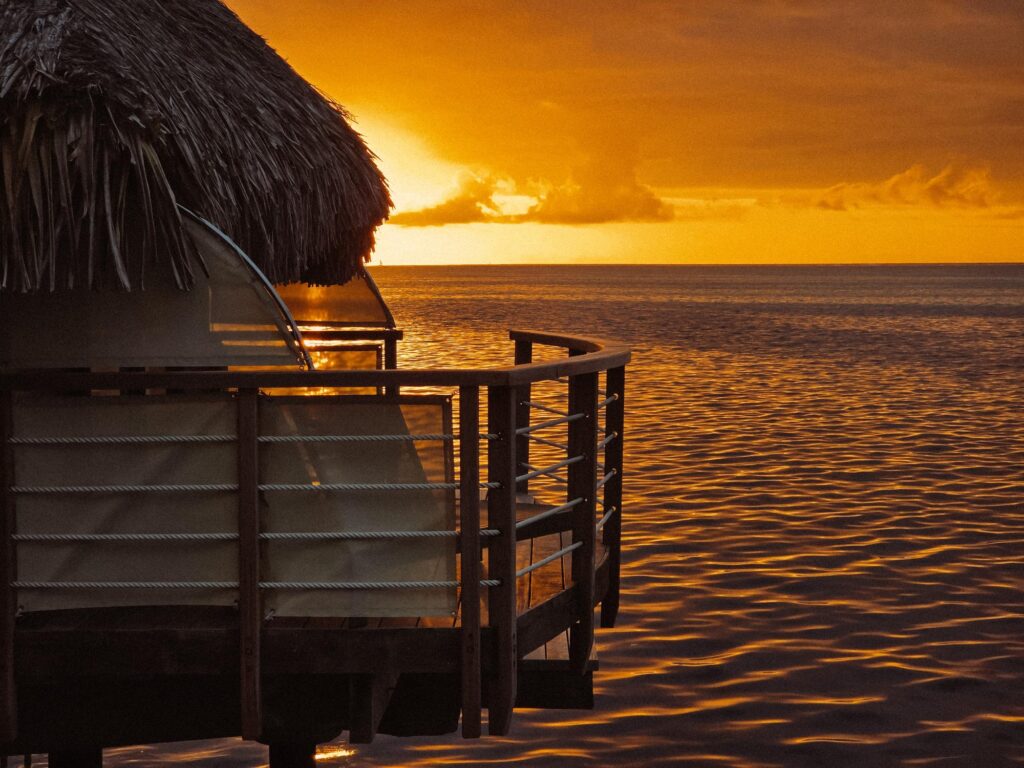
French Polynesia’s dramatic green mountains look incredible in photographs, but all that beauty comes with a shady side. Depending on the resort’s location, you might lose direct sunlight earlier than expected. And when you’ve paid a small fortune for a private deck, that’s worth considering.
I almost booked a resort on the eastern side of Moorea, but after checking its location and reviews, I decided to keep looking. At Manava, we enjoyed afternoon sunshine right up until sunset, exactly what I wanted. Of course, sun exposure depends on the season, surrounding mountains and the position of your bungalow.
My tip: Don’t just check whether your bungalow has a lagoon or sunset view. Look at the surrounding landscape and the direction your deck faces. If afternoon sunshine matters, ask the resort before booking.
6. High Season Doesn’t Guarantee Sunshine
The best chances of good weather in French Polynesia are generally during the drier season, May – October, while November – April tends to be wetter and more humid. But don’t mistake the dry season for a guarantee of sunshine. A passing tropical shower is one thing. Several days of rain when you’ve paid a small fortune to enjoy your private deck and the lagoon? Better to be prepared for bad weather that never comes than to be caught completely off guard.
We were incredibly lucky during our three nights on Moorea. We had beautiful weather for snorkeling, kayaking and relaxing outdoors. Just two days later, the weather took a turn for the worse. Had we booked a little later, our experience might have been very different.
My tip: Off-season prices can be tempting, but it’s a bit of a lottery. Some get lucky with the weather, others don’t. And if you’re one of the unlucky ones, don’t say I didn’t warn you!
7. How Much Time Will You Actually Spend There?
Before spending an outrageous amount on an OW bungalow, ask yourself: how much time will you actually spend enjoying it? If your itinerary is packed with hikes, island tours, boat trips and excursions, you might pay a fortune for a very fancy place to sleep. Personally, I think that defeats the purpose.
We booked 3 nights at Manava and deliberately planned no excursions. We snorkeled from our deck, went kayaking, used the gym and spent plenty of time doing absolutely nothing. We also walked out for lunch whenever we wanted a change of scenery. And no, we didn’t get bored. Not even close. For me, the bungalow wasn’t just somewhere to stay. It was the experience itself.
My tip: If you’re planning to explore the island, save the OW bungalow for a few slower days. Spend the rest of your trip somewhere more affordable, or switch to a beach bungalow at the same resort. These can sometimes cost half as much, and you still get to enjoy the resort’s facilities.
So, Are Overwater Bungalows in French Polynesia Worth It?
I hope these tips have helped you plan your own overwater bungalow experience. For more photos and videos from our stay, head over to my Instagram. I’d love it if you followed along!
Now, to answer the big question: Those 3 nights on Moorea were one of the highlights of our trip. Was it ridiculously expensive? Absolutely. Would I do it again? Without hesitation. Waking up above the lagoon, snorkeling straight from our deck and watching a sea turtle and reef sharks swim past are memories that will stay with me forever.
And if an overwater bungalow is beyond your budget, don’t worry. French Polynesia has plenty of beautiful, much more affordable places to stay. The trick is to book early, before the best options disappear. Besides, overwater bungalows aren’t for everyone, even if you can afford one. My partner, for example, wasn’t entirely comfortable sleeping above the lagoon. Apparently, some people just prefer solid ground beneath their feet. Who knew? 😉
.